Water damage can be divided into three categories based on
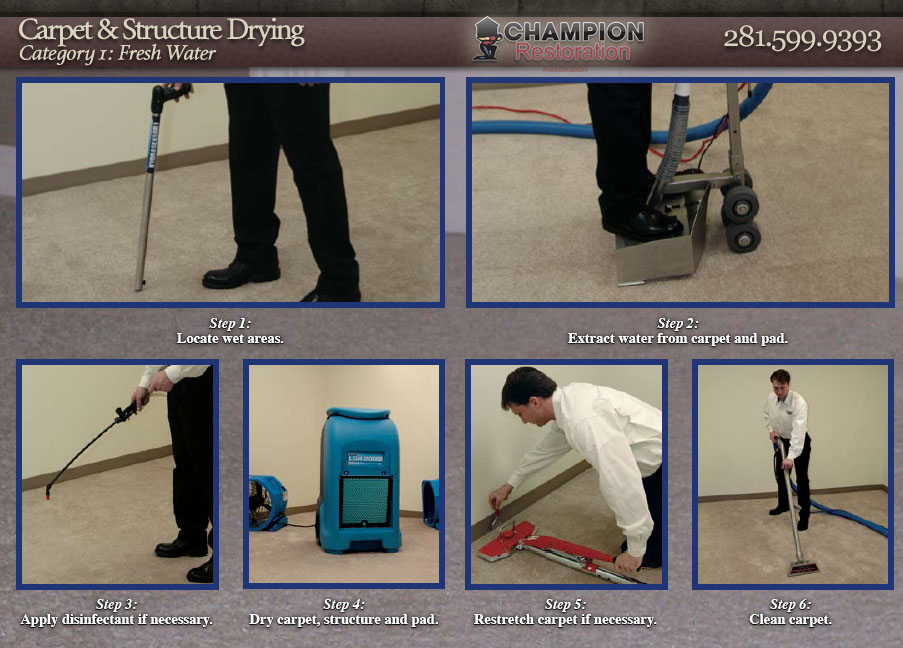
Category 1
(Fresh Water)
Originates from a sanitary source and poses no substantial risk from dermal, ingestion, or inhalation exposure. However, it may not always remain clean after it comes into contact with other surfaces or materials.
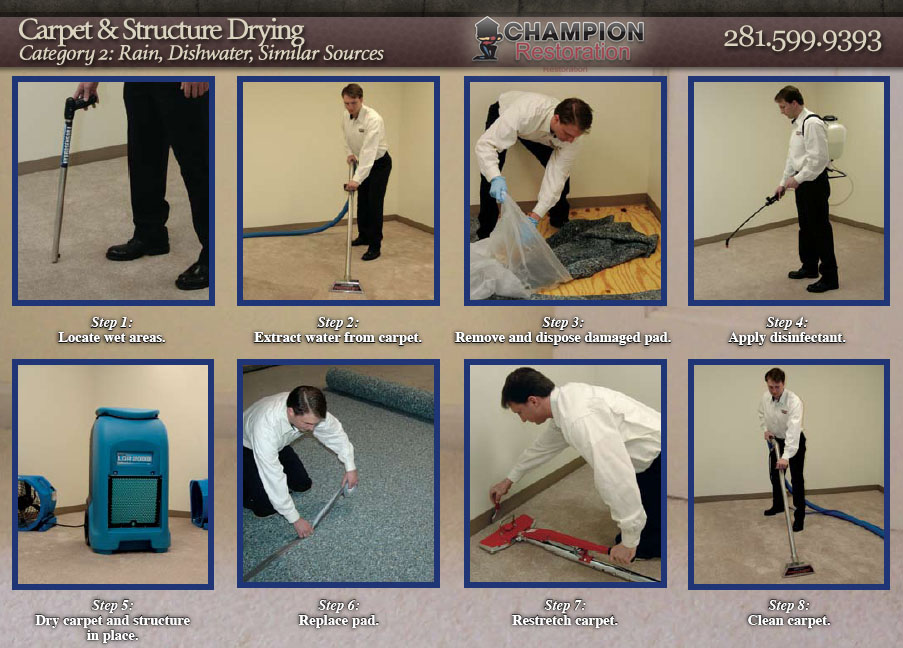
Category 2
(Rain, dishwasher, etc.)
Contains significant contamination and has the potential to cause discomfort or sickness if contacted or consumed by humans. It may contain potentially unsafe levels of microorganisms or nutrients for microorganisms, as well as other organic or inorganic matter (chemical or biological).
Dealing with a Category 2 water damage:
- Locate wet area
- Extract water from carpet
- Remove and dispose of damaged pad
- Apply disinfectant
- Dry carpet and structure in place (Category 1 or 2)
- Replace Pad
- Restretch Carpet
- Clean carpet
Category 3
(Sewage, silt or rising water)
Loss meaning it is grossly contaminated and may contain pathogenic, toxigenic or other harmful agents (Such water sources may carry silt, organic matter, pesticides, heavy metals, regulated materials or toxic organic substances).
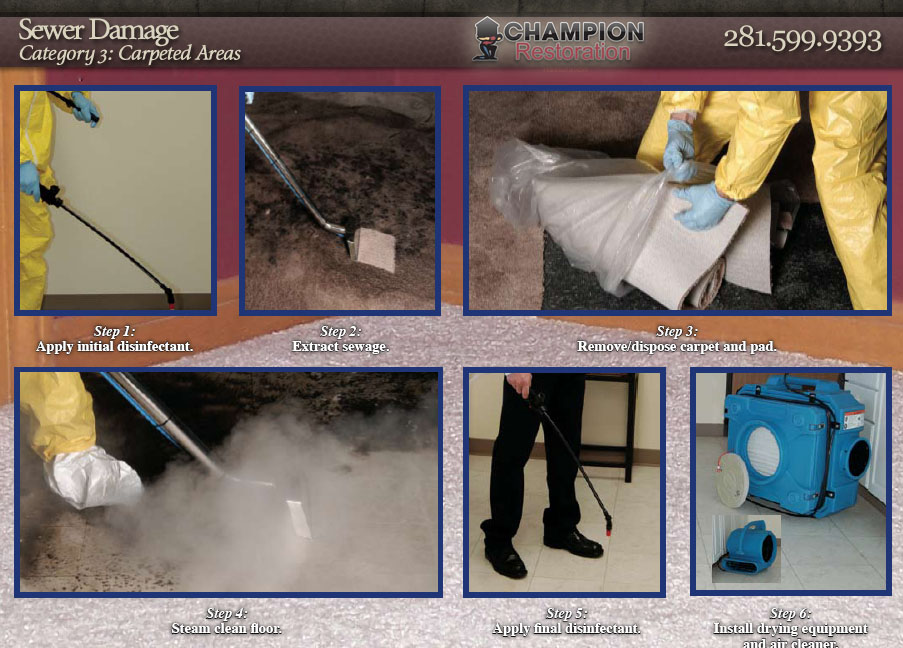
The steps for dealing with a Category 3 carpeted areas:
- Apply initial disinfectant
- Extract sewage
- Remove/dispose of carpet and pad
- Steam clean floor
- Apply final disinfectant Install drying equipment and air cleaner
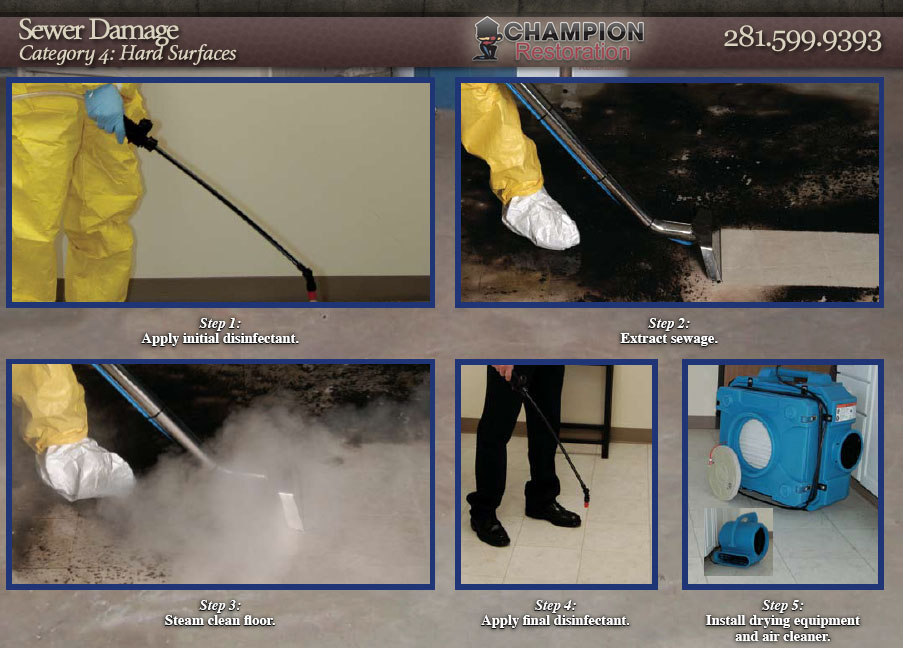
The steps for Category 3 hard surface areas:
- Apply initial disinfectant
- Extract sewage
- Steam clean floor
- Apply final disinfectant
- Install drying equipment and air cleaner
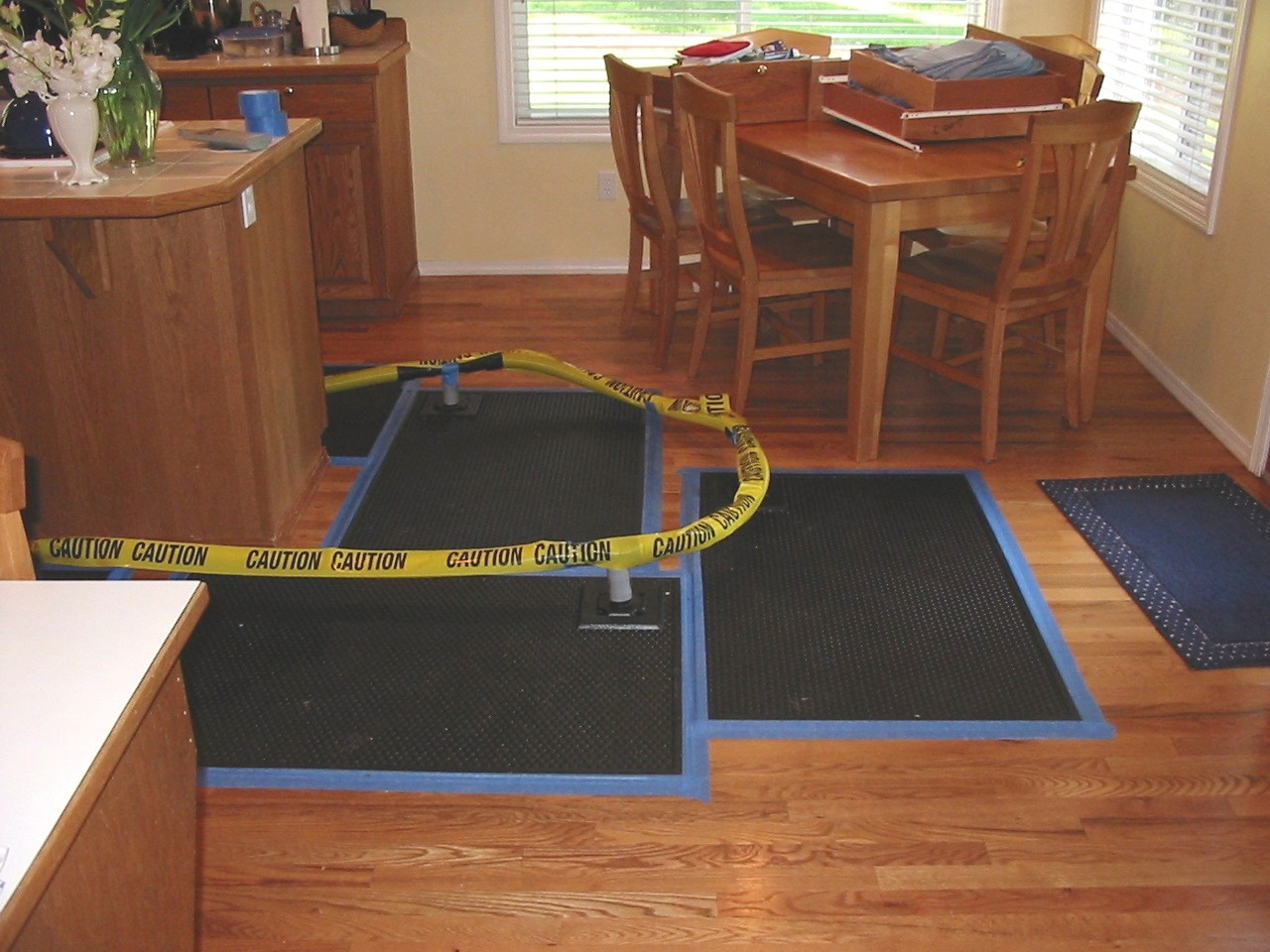
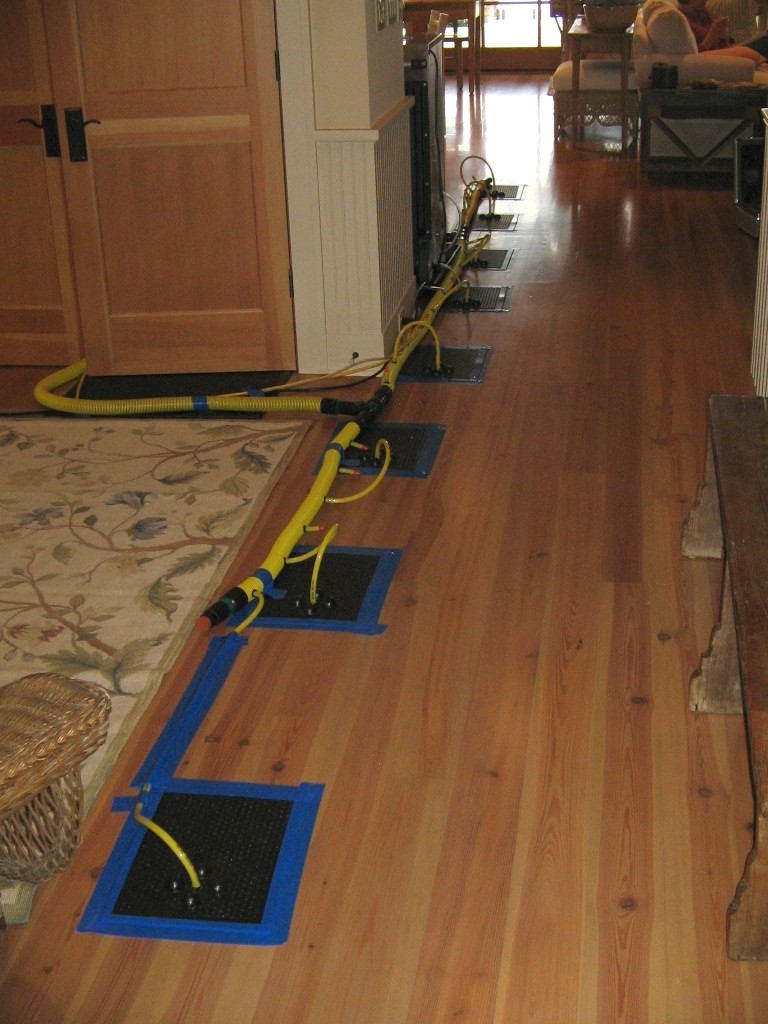
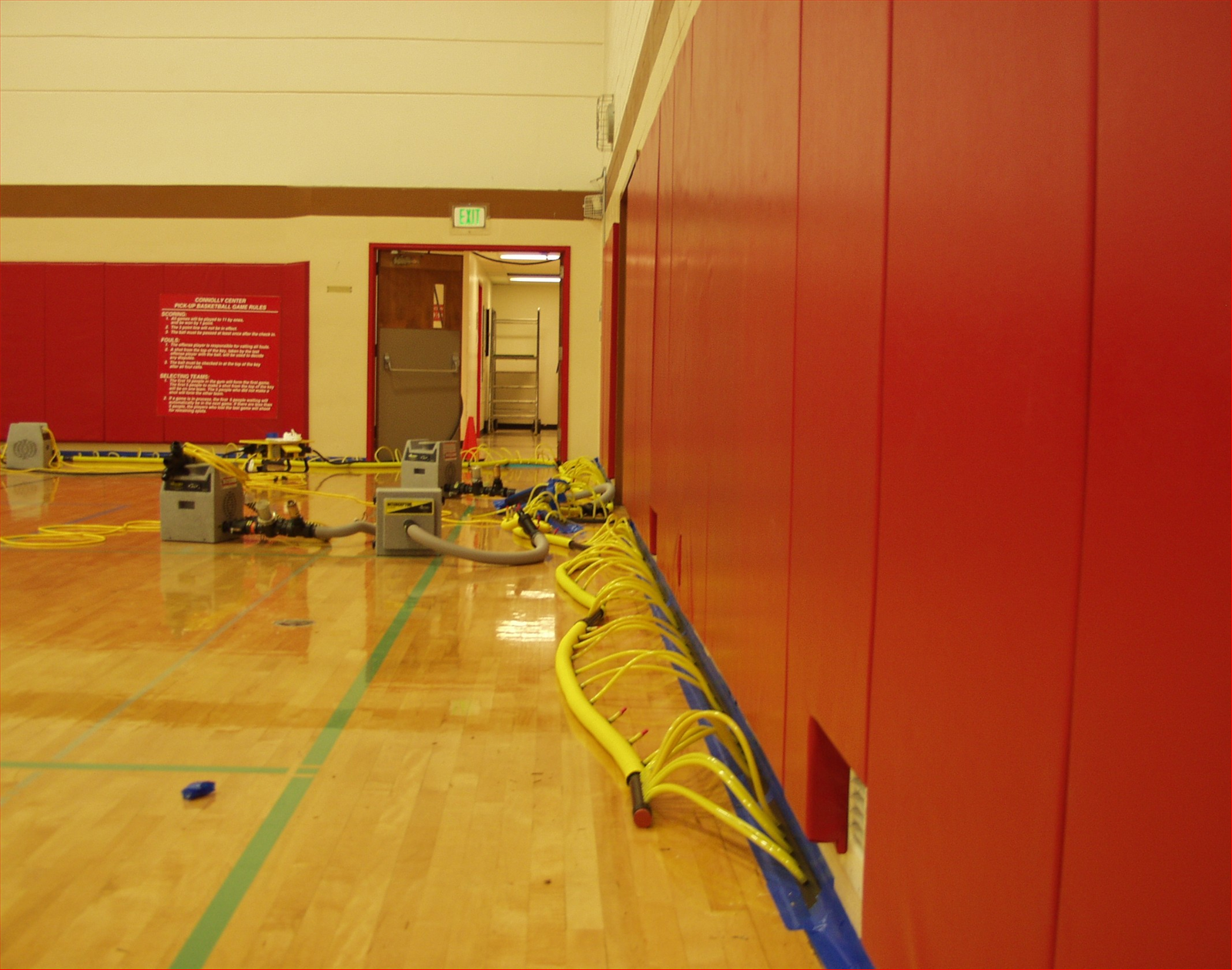
Our Process

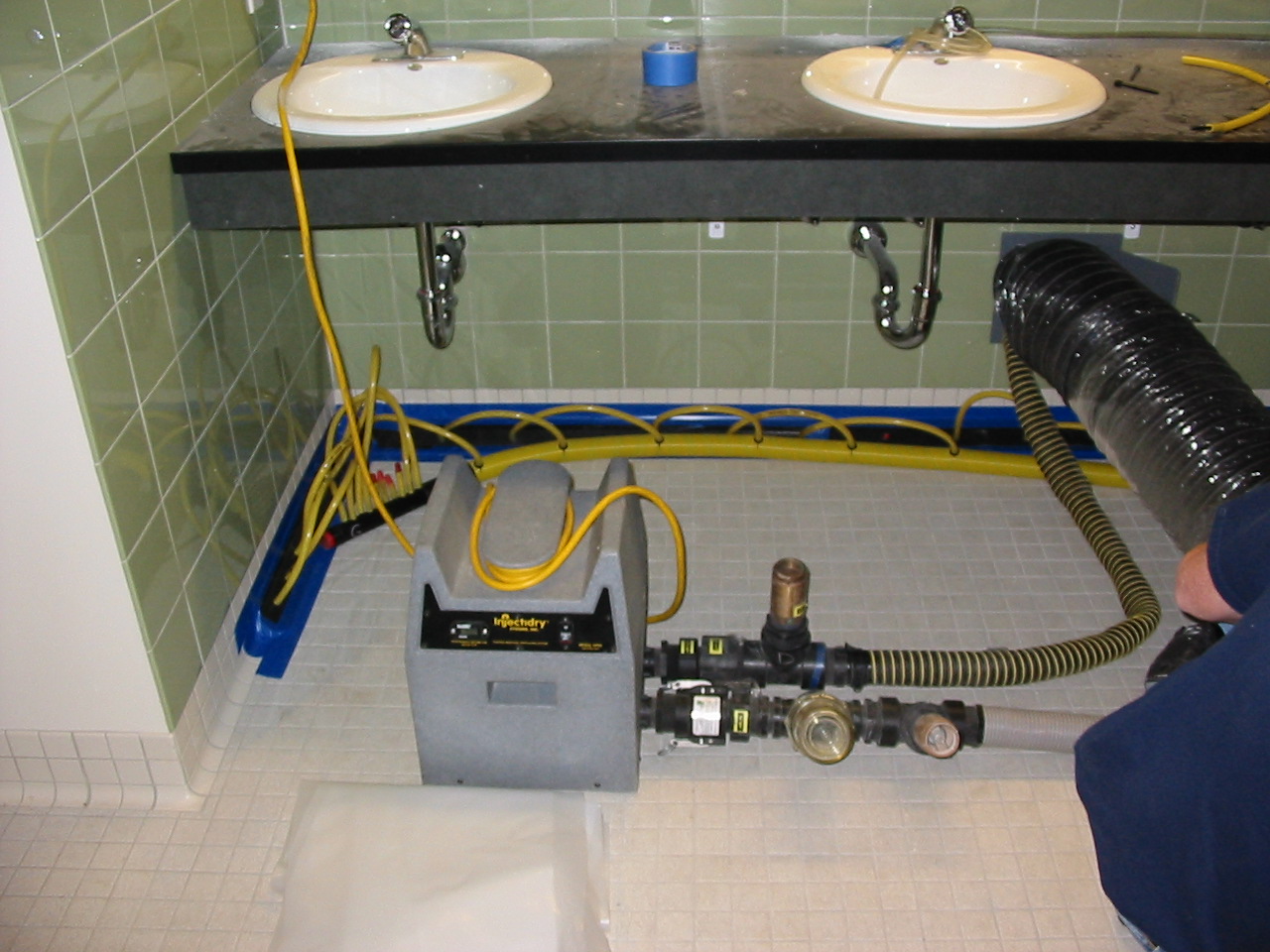


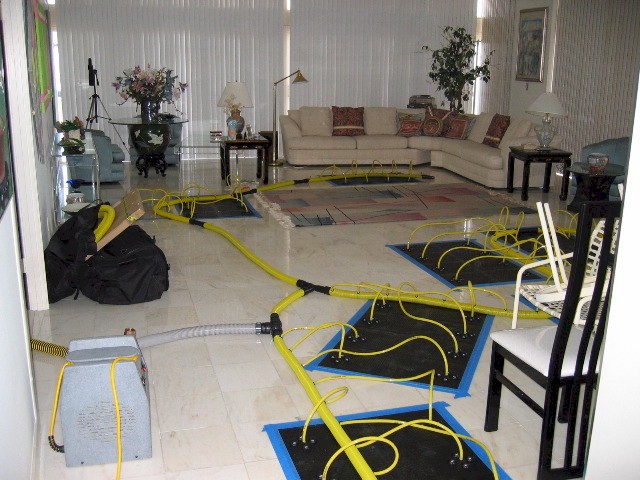
Call (281) 395-9000 now to prevent further damage.
We can have one of our 24-Hour Emergency Response Teams onsite to assess damage & restoration in about an hour.